Dark Money Basics
WHAT IS “DARk MONEY”?

Dark money is political spending on election advertising by anonymous donors. It is called “dark” because we can’t see who is sponsoring the messages in political ads. Dark money has also been called “dirty money” because it is frequently used to bombard the voters with negative, misleading information, and outright lies. Current Arizona law allows anonymous donors to spend unlimited amounts of money in order to sway your vote.
Where does dark money come from?
Dark money comes from organizations that fall into the campaign finance reporting loophole created in 2010. They are categorized by Internal Revenue Service (IRS) as tax-exempt non-profit corporations. But not all non-profits are sources of dark money:
501c3 corporations are non-profit charitable organizations Not dark money!
The IRS stipulates that attempts to influence legislation or participation in campaign activity may not be a substantial part of their activities. Donations to charitable organizations are tax deductible. 501c3 organization are not a source of dark money. Examples include:
Churches, synagogues, mosques
American Cancer Society
Planned Parenthood Federation of America
Zoos, museums, symphonies
Amateur sports organizations, e.g., Little League
501c4 corporations are non-profit social welfare organizations. Dark money!!
The IRS defines social welfare organization as “operating operate primarily to further the common good and general welfare of the people of the community (such as by bringing about civic betterment and social improvements).
Lobbying and participation in elections are an integral part of 501c4 activity. Because 501c3 organizations are not permitted to engage in substantial political activity, many 501c3’s have established separate 501c4 corporations under which they do collect money and fund political activity. Donations to social welfare organizations are not tax deductible. 501c4s are a major source of dark money. Examples include:
Planned Parenthood Action Fund/Planned Parenthood Votes
Sierra Club
National Rifle Association
We Build the Wall
Americans for Prosperity
Sixteen Thirty Fund
Progress Now Arizona
501c5 corporations are non-profit Labor, Agricultural, or Horticultural Organizations. Dark Money!!
These non-profits are permitted to engage in lobbying and political activity. Donations are not tax deductible. Unions are a major source of dark money.
501c6 corporations are non-profit trade associations. Dark Money!
These non-profits are permitted to engage in lobbying and political activity. Donations are not tax deductible. 501c6s are a major source of dark money. Examples include:
Chambers of Commerce
Trade and professional organizations
Real estate boards
Football leagues
Limited Liability Corporation (LLC) is a business structure allowed by state statute. Some LLCs qualify as non-profit organizations under IRS rules and can engage in lobbying and election activity. Donations are not tax deductible. LLCs can be a source of dark money.
Is campaign finance regulation a radical new idea?
Not at all! It all started in the 1757 election to the Virginia House of Burgesses, George Washington spent $195 on punch and hard cider for his friends. The Virginia legislature quickly passed a law prohibiting candidates “or any persons on their behalf” from giving voters…” money, meat, drink, entertainment or provision or any present gift, reward or entertainment etc. in order to be elected.” For a timeline of campaign finance regulation in the US click here. (link to History of campaign finance)
Over the years many laws were developed nationally and by the states to regulate who can spend and how much they can spend to try to influence your vote. Disclosure of the donor was required as a tool to fight corruption in the political process. They were deemed constitutional by the Supreme Court in 1934.
In 2010, when the Supreme Court decided that corporations have the same free speech rights people have, the door was opened to allow corporations to participate in electioneering. This created a loophole in the disclosure laws. These laws were written to regulate campaign donations by individuals only, since corporations has been excluded from participation in elections.
When the Supreme Court opened the political process to corporations, it was anticipated that new national and state laws would be adopted to regulate these contributions by requiring disclosure of the sources.
In Arizona, only contributors who donate through 501c4 organizations, unions (501c6), or limited partnerships can hide their identity. If you donate directly to a candidate, to a political party, or to a PAC, you have been required to report your name, address, and occupation for many years. Transparency in Arizona election finance is NOT a new or radical idea!
Liberal? Conservative? Or AMERICAN?
All of the above! There are both Democrats and Republicans supporting it, as well as opposing it.
In the past, Democrats have been more vocal in calling attention to dark money. That’s probably because starting in 2010, when dark money entered US politics, the majority of dark money was spent on behalf of Republican candidates. But in 2020, Democrats took the lead nationally. Disclosure of the source of dark money will apply equally to all political leaningsand party affiliations.
Isn’t this a federal issue?
Campaign finance regulations for federal offices (President/Vice President, US Senators and Representatives) are created by Congress and donors are regulated and reported to the Federal Elections Commission.
This initiative will not address dark money in Federal elections. Currently the US House of Representatives has approved HR1 (For the People Act of 2021), that includes an expansion of the prohibition of campaign spending by foreign nationals and requires disclosure of campaign-related fundraising and spending. It is awaiting Senate action.
Campaign finance regulations for State and local elections, are made by the State Legislature. Donors are regulated and reported to the Arizona Secretary of State for State elections, and to county or city officials for local elections. This initiative addresses Arizona elections only.
WHY IS DARK MONEY BAD FOR DEMOCRACY?
How does dark money lead to corruption?

Ideally, elected officials are responsive to the interests of the people who vote for them.
When people with deep pockets are able to bankroll political campaigns, their needs and desires become more important and receive more attention from the politicians they support. Investing huge amounts in a political campaign is bribery. The expectation is “I will invest in your campaign and when you are elected, I expect you will support my interests.”
The potential for this type of corruption in American elections has long been recognized. National and state level campaign finance laws have been on the books for many years, with the intended purpose of curtailing the inherent opportunity for corruption. These laws operate in two ways:
Limitations on the amount an individual can donate to a candidate, political party, or PAC, thus limiting the corruptive impact of the donation, and
Disclosure of the source of the funds so voter can at least know whose interests the candidate is likely to support.
These anti-corruption laws were written to address all of the legal political spenders in our elections. Prior to 2010. These include candidates, political parties, and various types of Political Action Committees (PACs).
When the Supreme Court allowed new entities - non-profit businesses* - into the campaign arena, the existing laws did not cover these entities. They are free to anonymously spend unlimited amounts of money to support or oppose a candidate or ballot initiative.
*These include:
501c4 — Social Welfare Organizations
501c5 — Unions
501c6 — Trade Associations
LLCs — Limited Liability Corporations
How does dark money open the door to foreign influence in our elections?
Federal Election law (52 USC 30121) prohibits foreign contributions in the electoral process. Examples of prohibited foreign meddling include:
Advocating overthrow of the government
Spreading misinformation on social media
Directly funding candidates
Creating doubt in political institutions and processes
For more information about foreign influence visit the Department of Homeland Security’s Cybersecurity and Infrastructure Security Agency.
How does dark money lead to negative advertising?
When campaign messages are anonymous, nobody is responsible for what is said, and the voter can’t consider the credibility or motives of the anonymous people behind the message.
Candidates might hesitate to use lies and innuendo in order to sway your vote because their reputation is on the line. But anonymous spenders can say anything, true or not. And they do.
How does dark money erode the democratic process?
Democracy depends on a well-informed electorate.
These days, voters get most of their information about ballot items through campaign advertising media and social media ads, signs, and direct mail. These communications are increasingly being paid for by anonymous donors. Campaigns are becoming mud-slinging events, and disinformation circulates freely, since no one is responsible for what is said.
Voters make their decisions based on these anonymous and frequently fraudulent advertisements. The electorate is not well informed, and the political process is viewed as nasty. This makes people not want to vote at all.It also dissuades individuals from entering the process themselves, thereby limiting the diversity of viewpoints represented in the electoral process.
THIS INITIATIVE
Which elections will be impacted by this initiative?
This initiative will impact all Arizona elections at the state, county, and local levels. This includes:
State level:
Governor
Secretary of State
Attorney General
Treasurer
Corporation Commission
State Mine Inspector
Superintendent of Public Education
State Senator
State Representative
Statewide ballot initiatives
County level:
County Supervisors
Assessor
Clerk of the Superior Court
Constables
Justices of the Peace
County Attorney
Recorder
School Superintendent
Sheriff
Treasurer
County ballot initiatives
Local level:
Local level ballot initiatives and local jurisdiction elections are subject to this initiative. There are many types of incorporated local jurisdictions in Arizona that hold elections, including:
Cities and Towns: The organization of these jurisdictions varies by location. Generally, Cities and Towns have mayors and council members. There may be other elected offices.
School Districts: School Boards
Special Districts: These vary by location. They are created as special taxing districts and are governed by an elected Board. Examples include: fire districts, tourism districts, and regional transportation districts.
How many signatures are needed?
A minimum of 237,645 valid signatures from registered voters in Arizona are needed. However, because not all signatures we collect are likely to be valid, our goal is to collect at least 300,000 signatures before the deadline in July, 2022.
If enough people sign the petition, will it become law?
No, if enough people sign the petition it will put the proposed law on the ballot in the 2022 election. Voters will then decide if it becomes law.
How popular is the effort to close the dark money loophole among Arizona voters?
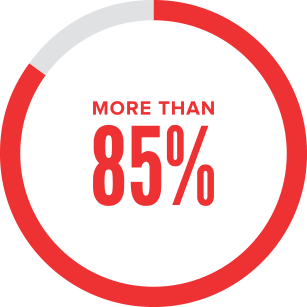
In the absence of statewide polling information, we can measure the popularity of this initiative by looking at how the idea fared in several local elections. In 2018, Phoenix voters approved a dark money reporting ordinance in with 85% of the vote. Tempe approved a similar measure with 91% with the vote.
The Arizona legislature pre-empted these local ordinances after they were passed, by barring cities and other political subdivisions of the state from requiring federal tax-exempt organizations from identifying the sources of financial contributions.
Another sign that voters support transparency is the popularity of HR1, the Federal bill to reform election laws, including requiring transparency in election financing. 57% of all voters approve HR1, and 30% oppose it, with 13% undecided.
More telling is report in the New Yorker reporting on a January 8 conference call between a policy adviser to Senator Mitch McConnell and the leaders of several prominent conservative dark money groups. One participant on that call reported on research conducted to determine how to fight the disclosure portions of HR1. He said “when presented with a very neutral description” of the bill, “people were generally supportive.” The New Yorker article said the people on the call “…conceded that the bill, which would stem the flow of dark money…was so popular that it wasn’t worth trying to mount a public-advocacy campaign to shift opinion. Instead, a senior Koch operative said that opponents would be better off ignoring the will of American voters and trying to kill the bill in Congress.”
Source: Mayer, Jane. “Inside the Koch-Backed Effort to Block the Largest Election-Reform Bill in Half a Century.” The New Yorker. March 29, 2021
Didn’t we do this before?
Yes, we actually did this twice before, hoping to be on the ballot for the both 2018 and 2020 elections.
In 2018 we had enough valid signatures according to the Secretary of State, but dark money organizations sued on the premise that some signatures, collected by paid circulators, were not valid. We were denied a position on the ballot because the Arizona Supreme Court excluded signatures collected by out-of-state paid circulators who, never having been served a subpoena, did not show up in court to defend their signatures.
In 2020, we were on track to qualify for the ballot until March, when Covid shut the state down. Many of our volunteer petition circulators are in high-risk groups. Even after the state re-opened in May, we make a decision to not encourage our volunteers to spend time collecting signatures in public places. As it turns out, our decision was wise, but in protecting our petition circulators we forfeited the ability to collect enough signatures to qualify for the 2020 ballot.
Why didn’t we get enough signatures in 2020 if Invest in Ed was able to do so?
Money! Invest in Ed spent $3,840,820 for paid circulators, compared with $550,180 spent by ODM for this purpose. Our total budget, $1,526,058, was 40% of what Invest in Ed spent just on paid circulators. Our volunteer circulators were also largely in high-risk groups for Covid and we did not think it was wise to send them out to gather signatures even after Governor Ducey lifted the stay-at-home order in May.